
BK-1978-519
c. 1910 - c. 1915
Medium
embroidering
Dimensions
60; 34
Rights
Public Domain
About this artwork
Schenking van jkvr. C.I. Six, 's-Graveland
Art Historical Context
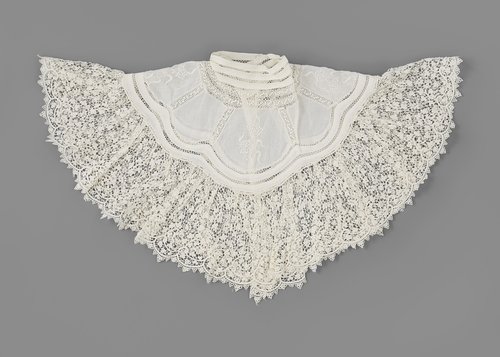
This delicate embroidered panel, cataloged as BK-1978-519, dates to approximately 1910–1915 and measures about 34 cm high by 60 cm wide. Created anonymously, it exemplifies the fine needlework traditions prevalent in early 20th Europe, particularly in the Netherlands. Embroidery during this era was often a domestic art form, practiced by women in middle- and upper-class households as both a practical skill and a creative outlet. The medium's significance lies in its labor-intensive techniques—such as cross-stitch, satin stitch, or counted thread work—which allowed for intricate patterns and vibrant colors, transforming simple fabric into enduring decorative objects. The piece entered the collection as a generous gift from jkvr. C.I. Six of 's-Graveland, a village near Amsterdam known for its historic estates. This donation in 1978 highlights how private family heirlooms preserve cultural heritage, bridging personal stories with public appreciation. Though the exact motif remains unspecified, such works from the pre-World War I period often reflected floral, geometric, or symbolic designs inspired by Art Nouveau or folk traditions, serving as table runners, wall hangings, or samplers. Today, this anonymous embroidery invites us to admire the unsung artistry of everyday makers, reminding visitors of embroidery's role in women's creative expression amid rapid social changes.
About the Artist
anonymous
In the vast tapestry of art history, "Anonymous" stands not as a singular individual but as a collective designation for countless unidentified creators whose works have endured across millennia. These artists, spanning prehistoric cave painters to medieval illuminators and folk craftsmen, produced the foundational layers of human visual culture. Prior to the Renaissance, when individual fame emer...