
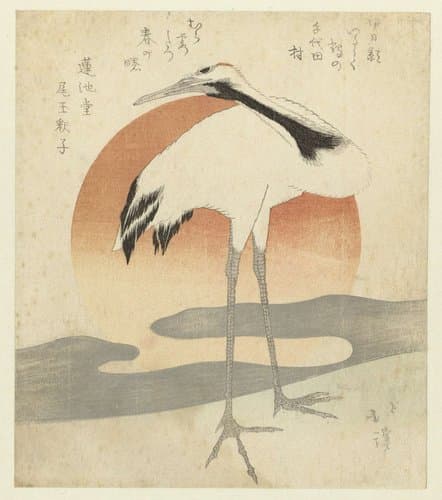
Kraanvogel voor de eerste zonsopgang van het jaar
c. 1821
Medium
nishikie, with metallic pigments and blindprinting
Dimensions
206; 181
Rights
Public Domain
About this artwork
verzamelaarsmerk, passe-partout, links onder, gedrukt: JABdH met een haan.
Art Historical Context
**Kraanvogel voor de eerste zonsopgang van het jaar (Crane Before the First Sunrise of the Year)** *Totoya Hokkei, c. 1821* This delicate ukiyo-e print by Totoya Hokkei (1791–1848), a prominent pupil of the famed Katsushika Hokusai, captures a crane poised gracefully before the year's first dawn—a poignant symbol of longevity, good fortune, and renewal in Japanese culture. Created around 1821 during the Edo period, it exemplifies *surimono*, luxurious custom prints often commissioned for New Year's celebrations by poetry circles or patrons. Hokkei's mastery shines in evoking quiet anticipation, blending natural elegance with seasonal auspiciousness amid Japan's vibrant woodblock tradition. Printed in *nishikie* (brocade picture) technique, the work boasts vibrant colors layered through intricate woodblock carving, enhanced by shimmering metallic pigments that mimic sunrise glow and subtle blindprinting for textured feathers and embossed effects. At just 206 × 181 mm, its intimate scale suited personal gifting, underscoring the era's fusion of art, poetry, and ephemera. A collector's mark bottom left—"JABdH with a rooster," framed in passe-partout—hints at its prized status in European collections, bridging Japanese printmaking with global appreciation. Hokkei's print not only reflects ukiyo-e's peak but invites viewers to ponder timeless themes of hope at winter's end.
About the Artist
Totoya Hokkei · 1780–1850
Totoya Hokkei (魚屋 北渓, 1780–1850), born Iwakubo Tatsuyuki in Edo (modern Tokyo), began his life as a humble fishmonger in the Yotsuya Samegahashi district, a trade reflected in his art name "Totoya," meaning fish shop. He transitioned to art through rigorous training, first studying under Kanō Yōsen'in Korenobu, head of the Kobikichō branch of the prestigious Kanō school, where he honed landscape p...