
Kunda (Double Bell)
Unknown Artist
late 19th century
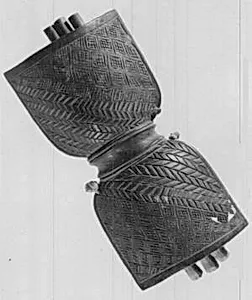
Medium
Wood
Dimensions
Height: 5 in. (12.7 cm)
Classification
Idiophone-Shaken-rattle
Culture
Congolese
Department
Musical Instruments
Museum
Metropolitan Museum of Art, New York, NY
Credit
The Crosby Brown Collection of Musical Instruments, 1889
Accession Number
89.4.1369
Rights
Public Domain
Art Historical Context
Nestled in the Metropolitan Museum of Art's Crosby Brown Collection of Musical Instruments the *Kunda (Double Bell)* is captivating example of late 19th-century Congolese craftsmanship. Carved from wood and standing just 5 inches (12.7 cm) tall, this compact idiophone—classified as a shaken rattle—features a distinctive double-bell design. In Congolese culture, such instruments were essential for producing rhythmic sounds by shaking, vibrating the wooden body to create resonant tones without additional strikers. These kundas held profound cultural importance among Congolese peoples, often used in communal ceremonies, dances, and rituals to invoke spirits, mark life events, or accompany storytelling. The wooden medium highlights skilled artisanal techniques, where carvers shaped the resonant chambers to amplify subtle vibrations, blending functionality with symbolic form. Though created by an unknown artist, the piece exemplifies the ingenuity of Central African musical traditions during a time of colonial transitions. Today, this artifact invites visitors to appreciate how sound and sculpture intertwine, offering a tangible link to Congo's vibrant auditory heritage.