
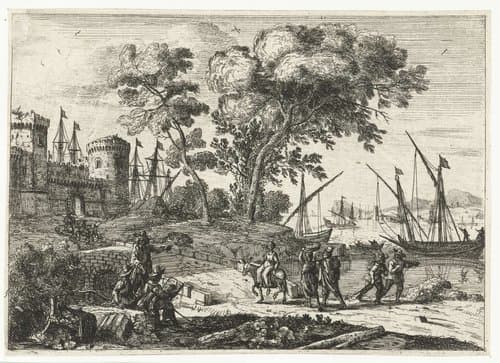
Kunstenaar aan het werk in een landschap
1638 - 1641
Medium
etching
Dimensions
127; 179
Rights
Public Domain
About this artwork
verzamelaarsmerk, verso linksonder, gestempeld: Lugt 240
Art Historical Context
Claude Lorrain's etching *Kunstenaar aan het werk in een landschap* (Artist at Work in a Landscape), created between 1638 and 1641, captures the artist's fascination with the idealized natural world. Measuring just 127 × 179 mm, this intimate print depicts a figure—likely an artist—sketching amidst a serene, sunlit vista of rolling hills, trees, and distant architecture. Lorrain, a leading French Baroque landscape painter based in Rome, drew inspiration from the Italian countryside, blending classical antiquity with poetic realism in his compositions. Etching was a masterful choice for Lorrain, allowing him to achieve delicate lines and subtle tonal gradations that evoke the luminous atmosphere of his oil paintings. One of around 40 known prints by the artist, it showcases his innovative use of the medium to replicate effects like soft shadows and expansive skies, making his vision accessible beyond elite patrons. This technique helped popularize the "classical landscape" genre, influencing later artists from Poussin to the Romantics. A collector's mark (Lugt 240) stamped verso lower left underscores its provenance, linking it to esteemed European collections. This rare gem invites visitors to ponder the creative process amid nature's grandeur, a timeless theme in Lorrain's oeuvre.
About the Artist
Claude Lorrain · 1604–1682
Claude Lorrain (c. 1600-1682), born Claude Gellée in the village of Chamagne in northeastern France's Duchy of Lorraine, stands as one of the most influential landscape painters in Western art history. Orphaned by age twelve, his journey to artistic mastery was unconventional—beginning with apprenticeships in pastry-making and inlay work before destiny led him to Rome around 1620, where he would s...