
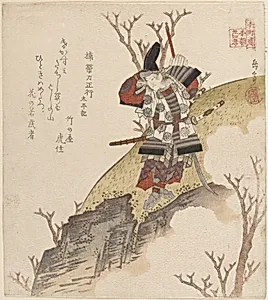
Kusonoki Tatewaki Masatsura (Warrior From the Book: Taiheiki)
ca. 1840
Medium
Woodblock print (surimono); ink and color on paper
Dimensions
8 1/4 x 7 1/4 in. (21 x 18.4 cm)
Classification
Prints
Culture & Period
Japan · Edo period (1615–1868)
Department
Asian Art
Museum
Metropolitan Museum of Art, New York, NY
Credit
The Howard Mansfield Collection, Purchase, Rogers Fund, 1936
Accession Number
JP2426
Rights
Public Domain
Tags
Art Historical Context
This striking woodblock print by Yashima Gakutei, created around 1840 during Japan’s Edo period, portrays the warrior Kusunoki Tatewaki Masatsura, a figure drawn from the epic historical chronicle *Taiheiki*. The work captures a moment of quiet resolve, with the armored figure holding his swords as symbols of loyalty and martial duty. Gakutei, celebrated for his refined surimono designs, brings a sense of elegance and narrative depth to this intimate scene. Surimono prints like this one were privately commissioned luxury editions, often produced for poetry circles or special occasions. Unlike mass-market ukiyo-e, they featured premium paper, delicate color gradations, and sometimes embossed details, highlighting the high artistic standards of the time. Measuring just over eight inches square, the print invites close viewing, rewarding the eye with its careful balance of line and subtle color. As part of the Metropolitan Museum’s Asian Art collection, this piece reflects the Edo era’s fascination with medieval heroes and the enduring cultural value placed on bushido ideals. It offers viewers a glimpse into how historical stories were kept alive through exquisite printmaking traditions.
About the Artist
Yashima Gakutei · 1786–1868
Yashima Gakutei (c. 1786–1868), born in Osaka as the illegitimate son of a Tokugawa shogunate samurai named Hirata, adopted the name from his mother's subsequent marriage into the Yashima clan. Little is documented about his early years beyond these familial ties, but he pursued artistic training under the esteemed ukiyo-e masters Totoya Hokkei and Katsushika Hokusai, absorbing their precision in ...