
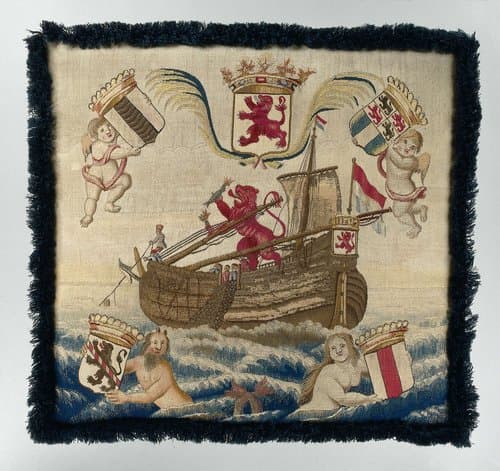
Kussenovertrek met een symbolische voorstelling van het zuiderkwartier van het college voor de grote visserij
ca. 1710 - ca. 1730
Medium
tapestry
Dimensions
67.5; 5; 61
Rights
Public Domain
About this artwork
hoogte 61 cm x breedte 67,5 cm x diepte 5 cm
Art Historical Context
This exquisite tapestry pillow cover, titled *Kussenovertrek met een symbolische voorstelling van het zuiderkwartier van het college voor de grote visserij*, was created by François Coppens around 1710–1730. Measuring approximately 61 cm high, 67.5 cm wide, and 5 cm deep, it served as a luxurious furnishing for homes or institutions, blending functionality with artistry. Coppens, a skilled weaver from the Low Countries, crafted this piece during the height of Flemish tapestry production, a period when such works adorned elite interiors and celebrated local pride. The design symbolically depicts the southern quarter of the "College voor de Grote Visserij," likely a prominent fishing guild or trade college in a coastal Dutch or Flemish city, evoking the economic vitality of the maritime trade. Tapestries like this used intricate weaving techniques—employing wool and silk yarns dyed in vibrant hues—to create detailed allegorical scenes, where symbols of prosperity, navigation, and community were woven into everyday objects. This reflects Baroque-era emphasis on grandeur and symbolism, turning a simple pillow cover into a badge of regional identity. As a rare surviving example of 18th-century guild-related textiles, it offers a window into the cultural importance of fisheries in early modern Europe, highlighting how artisans like Coppens wove stories of commerce and heritage into the fabric of daily life. Visitors, imagine resting against this vibrant emblem of the sea's bounty!