
Kyōgen Costume: Jacket (Suō) with Design of Lotuses
Unknown Artist
early 19th century
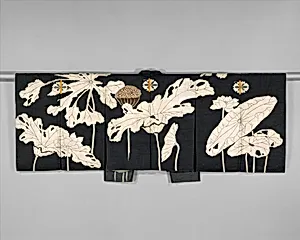
Medium
Resist-dyed and painted plain-weave bast fiber (asa)
Dimensions
Overall: 35 1/4 x 88 in. (89.5 x 223.5 cm)
Classification
Costumes
Culture & Period
Japan · Edo period (1615–1868)
Department
Asian Art
Museum
Metropolitan Museum of Art, New York, NY
Credit
Purchase, Mrs. Roger G. Gerry Gift, 1997
Accession Number
1997.209.1
Rights
Public Domain
Tags
Art Historical Context
This striking jacket, known as a suō, served as a key costume in Kyōgen theater during Japan’s Edo period. Kyōgen, the lively comic counterpart to the more solemnoh drama, relied on exaggerated garments to amplify the humorous antics of its performers. Created in the early 19th century, this example features a bold lotus motif rendered across plain-weave bast fiber (asa), a lightweight hemp-like cloth favored for its breathability during energetic stage movement. The decorative technique combines resist-dyeing with hand-painting, allowing the lotus blossoms and leaves to stand out in crisp, vibrant detail against the natural fiber ground. Such labor-intensive methods highlight the high value placed on theatrical attire, even for comedic roles. The generous proportions—measuring over seven feet across—would have billowed dramatically with the actor’s gestures, turning the costume itself into part of the visual punchline. Lotus imagery carried layered meanings in Japanese culture, evoking purity and renewal while nodding to Buddhist themes often woven into Kyōgen’s satirical stories. Today, this well-preserved garment offers visitors a vivid glimpse into the colorful world of Edo-period performance and the artistry of anonymous textile makers who supported Japan’s vibrant theater tradition.