
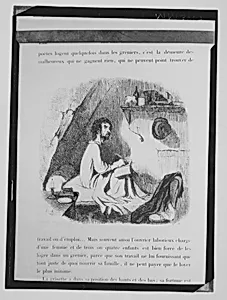
La Grande Ville: Nouveau Tableau de Paris Comique, Critique et Philosophique, by Paul de Kock. Paris (Maresq)1844. 2 vols.
Medium
illustrated book
Classification
Books
Department
Drawings and Prints
Museum
Metropolitan Museum of Art, New York, NY
Credit
Rogers Fund, 1921
Accession Number
21.87.2
Rights
Public Domain
Tags
Art Historical Context
**La Grande Ville: Nouveau Tableau de Paris Comique, Critique et Philosophique** Step into the bustling streets of 1840s Paris with this charming two-volume illustrated book, published in 1844 by Maresq. Authored by the prolific French novelist Charles-Paul de Kock, known for his lively depictions of everyday urban life, the work offers a "comic, critical, and philosophical" portrait of the French capital. Illustrations by Charles-François Daubigny, the renowned Barbizon school landscape painter in his early career, bring de Kock's vignettes to life, capturing scenes of men at work—particularly writing—with a keen eye for detail and social observation. Acquired by The Metropolitan Museum of Art through the Rogers Fund in 1921, this book exemplifies the 19th-century boom in illustrated literature, blending text and image to democratize storytelling for a wide audience. Daubigny's contributions highlight his versatility before his fame in plein-air landscapes, using precise line work typical of the period's print techniques to evoke Paris's vibrant, multifaceted society during the July Monarchy. Tags like "Men" and "Writing" nod to its focus on intellectual and clerical pursuits amid the city's chaos. Housed in the Met's Drawings and Prints department, *La Grande Ville* invites visitors to reflect on how art and literature intertwined to chronicle modern life, offering a window into the humorous, philosophical pulse of mid-19th-century France.
About the Artist
Charles-François Daubigny|Maresq|Charles-Paul de Kock · 1817–1878
Charles-François Daubigny was born on February 15, 1817, in Paris into a family of artists, with his father, Edmé-François Daubigny, a classical landscape painter, and his uncle, Pierre Daubigny, a miniaturist, providing his initial artistic training. He further studied under Jean-Victor Bertin, Jacques Raymond Brascassat, and Paul Delaroche at the École des Beaux-Arts, though he quickly moved bey...