
Lacquer Samples
Unknown Artist
19th century
Medium
Lacquer
Dimensions
H. 4 11/16 in. (11.9 cm); W. 1 1/2 in. (3.81 cm)
Classification
Miscellaneous
Culture
Japanese
Department
Arms and Armor
Museum
Metropolitan Museum of Art, New York, NY
Credit
Rogers Fund, 1923
Accession Number
23.214.19–.24
Rights
Public Domain
Tags
Art Historical Context
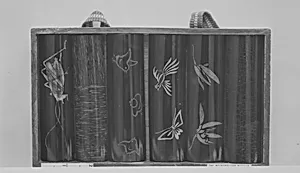
These delicate *Lacquer Samples* from 19th-century Japan offer a glimpse into the exquisite craftsmanship of urushi lacquerware, a revered art form perfected over centuries. Measuring just 4 11/16 inches high and 1 1/2 inches wide, these small rectangular pieces showcase intricate motifs of birds, insects, and butterflies—common symbols in Japanese art evoking the beauty of nature, seasonal change, and fleeting life. Collected via the Rogers Fund in 1923, they now reside in the Metropolitan Museum of Art's Arms and Armor Department, hinting at their possible use in decorating samurai armor, sword scabbards, or other military accoutrements. Japanese lacquer, derived from the sap of the urushi tree, demanded masterful technique: multiple thin layers were applied, polished to a mirror-like sheen, and often inlaid with gold or shell for shimmering effects. By the 19th century, during the late Edo and early Meiji periods, such samples served as trade tools or artisan references, demonstrating quality to clients amid Japan's opening to global markets. Their "miscellaneous" classification underscores their utilitarian yet artistic role. Though by an unknown artist, these samples highlight lacquer's cultural prestige—valued for durability, waterproofing, and aesthetic refinement. Visitors will appreciate how they bridge decoration and function, embodying Japan's harmonious blend of utility and poetic beauty.