
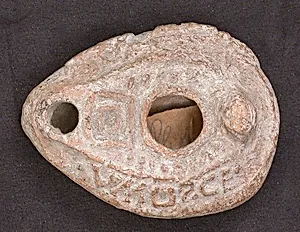
Lamp
Unknown Artist
7th–8th century
Medium
Earthenware; molded
Dimensions
H. 1 15/16 in. (4.9 cm) W. 7 3/4 in. (19.7 cm) D. 2 1/2 in. (6.4 cm)
Classification
Ceramics
Department
Islamic Art
Museum
Metropolitan Museum of Art, New York, NY
Credit
Gift of Miriam Schaar Schloessinger, 1961
Accession Number
61.150.2
Rights
Public Domain
Art Historical Context
This delicate earthenware lamp, crafted in the 7th–8th century during the early Islamic period, the practical artistry of everyday objects in the burgeoning Islamic world. Measuring just 1 15/16 inches high, 7 3/4 inches wide, and 1/2 inches deep, compact form suggests it was designed for oil burning, providing illumination in homes, mosques, or markets. As a molded ceramic, it reflects innovative techniques that allowed artisans to create uniform shapes efficiently, often with subtle relief decorations suited to low-fired earthenware's earthy tones. In the context of Islamic art, such lamps hold cultural significance as symbols of light—both literal and metaphorical, evoking spiritual enlightenment in a faith that reveres knowledge and divine guidance. Earthenware was a accessible medium in this era, bridging utilitarian function with aesthetic appeal before the later mastery of glazed ceramics. This example, gifted to the Metropolitan Museum of Art in 1961 by Miriam Schaar Schloessinger, offers a tangible glimpse into daily life under the Umayyad or early Abbasid caliphates, when trade and craftsmanship flourished across the Middle East. Though the artist remains unknown, the lamp's survival underscores the enduring value of humble ceramics in museum collections, inviting us to ponder the hands that shaped it over 1,300 years ago.