
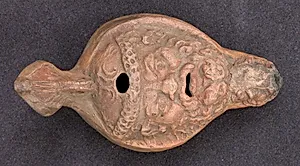
Lamp in the Form of a Mask
Unknown Artist
probably 1st century BCE–1st century CE
Medium
Earthenware; molded
Classification
Ceramics
Department
Islamic Art
Museum
Metropolitan Museum of Art, New York, NY
Credit
Edward C. Moore Collection, Bequest of Edward C. Moore, 1891
Accession Number
91.1.1611
Rights
Public Domain
Tags
Art Historical Context
Step into the ancient world with the *Lamp in the Form of Mask*, a captivating earthenware artifact likely crafted between the 1st century and 1st century CE. Housed in the Metropolitan Museum of Art's Islamic Department as part of the Edward C Moore Collection (bequest of 1891), this molded piece exemplifies early ingenuity in everyday objects. Oil lamps like this were essential for illumination in households across the ancient Near East and Mediterranean, where terracotta's affordability and durability made it ideal for mass production. The molded technique allowed artisans to create detailed, expressive masks—perhaps evoking theatrical faces, protective spirits, or human visages—transforming a functional item into a sculptural delight. These whimsical forms bridged utility and artistry, hinting at cultural rituals or domestic decoration in pre-Islamic societies. Though the artist remains unknown, the lamp's survival speaks to the enduring appeal of ceramics in conveying identity and light. Imagine this mask glowing softly at dusk, casting flickering shadows. A testament to ancient craftsmanship, it invites us to ponder the lives it once brightened.