
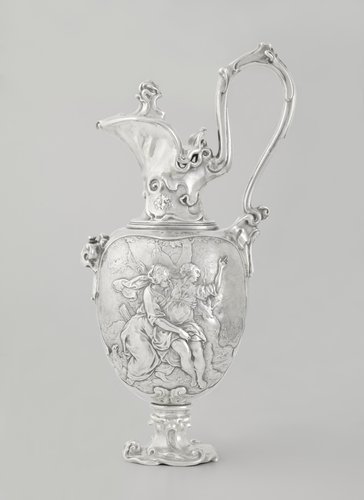
Lampetkan met voorstellingen uit de geschiedenis van Diana en Callisto
Medium
silver (metal)
Dimensions
907; 15; 8; 33
Rights
Public Domain
About this artwork
hoogte 33 cm x breedte 15 cm x diepte 8 cm x gewicht 907 gr
Art Historical Context
Step into the opulent world of 17th-century Dutch silver with *Lampetkan met voorstellingen uit de geschiedenis Diana en Callisto* (Ewer with Scenes from the History of Diana and Callisto crafted by Paulus Willems. van Vianen in 1613. This silver ewer, standing about 33 cm tall with a width of 15 cm, depth of 8 cm, and weighing a substantial 907 grams, served as a luxury hand-washing vessel for the elite. Van Vianen, a silversmith from Utrecht and part of the renowned Van Vianen family, adorned its surface with intricate narrative scenes from Ovid's *Metamorphoses*. The myth follows the nymph Callisto, seduced by Jupiter in Diana's guise, leading to her transformation into a bear—a tale of divine intrigue, chastity, and metamorphosis that captivated Renaissance audiences. Van Vianen's work exemplifies Northern Mannerism, blending fluid, elongated forms with classical mythology to showcase technical virtuosity in chasing and embossing silver. These ewers were status symbols in prosperous Dutch households, reflecting the era's fascination with antiquity amid the Dutch Golden Age's rising wealth from trade. The dense silver construction not only ensured durability but also allowed for the fine detailing that makes this piece a highlight of Mannerist metalwork. Measuring modestly yet commanding presence through its heft, this ewer invites us to ponder how everyday rituals were elevated to art, bridging utility and storytelling in early modern Europe.