
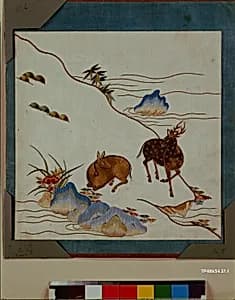
Landscape with Pair of Spotted Deer, Bamboo, Pine, Lingzhi Fungus, Iris, Water plants and Rocks
Unknown Artist
mid-18th century
Medium
Silk; on silk
Dimensions
13 1/4 x 12 1/4 in. (33.66 x 31.11 cm)
Classification
Textiles-Embroidered
Culture & Period
China · Qing dynasty (1644–1911)
Department
Asian Art
Museum
Metropolitan Museum of Art, New York, NY
Credit
Gift of Alice Boney, 1954
Accession Number
54.37.1
Rights
Public Domain
Tags
Art Historical Context
This exquisite embroidered silk panel, titledLandscape with Pair of Sp Deer, Bamboo, Pine, Ling Fungus, Iris, Plants and Rocks*, hails from mid-18th century China during the Qing dynasty (4–1911). just 13¼ x 12¼ inches, it captures a harmonious natural scene teeming with symbolic elements cherished in Chinese culture. Graceful spotted deer roam amid resilient bamboo and ancient pines—emblems of longevity and steadfastness—while the auspicious lingzhi fungus evokes immortality, and delicate iris and water plants add poetic fluidity. Such motifs were popular in decorative arts, conveying wishes for prosperity, peace, and eternal life. Crafted by an unknown artist using silk threads on a silk ground, the work exemplifies the Qing era's mastery of embroidery. Fine stitching creates lifelike textures: the deer's spotted coats shimmer, rocks gain rugged depth, and foliage sways with implied breeze. This intimate scale highlights the artisan's precision, typical of elite textile production for scholarly or domestic display. A gift to the Metropolitan Museum of Art in 1954, this piece reflects the dynasty's artistic refinement, blending landscape painting traditions with textile innovation. It invites visitors to ponder nature's enduring symbolism in everyday elegance.