
6/6
1679 - 1728
Medium
etching
Dimensions
147; 200
Rights
Public Domain
About this artwork
collector's mark: Lugt 240
Art Historical Context
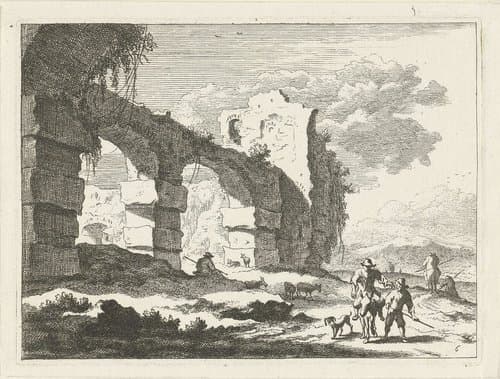
This etching, titled *6/6*, was created by the Dutch printmaker Johannes Gronsveld (1679–1728). The numbering suggests it belongs to a series of six related plates, a common format for artists of the period who produced sets exploring a single theme, narrative, or ornamental motif. Measuring just 147 by 200 millimeters, the work exemplifies the intimate scale favored for etchings intended for private collectors and albums rather than large public display. Etching allowed Gronsveld to achieve fine lines and tonal subtleties through the controlled biting of acid into a metal plate, a technique that flourished in the Netherlands during the late seventeenth and early eighteenth centuries. Such prints played an important role in spreading artistic ideas across Europe, often serving as models for other craftsmen or as affordable works for educated audiences. The presence of the Lugt 240 collector’s mark further indicates that this impression passed through distinguished hands, underscoring the lasting appeal of Dutch etchings among connoisseurs. Today the sheet offers a quiet window into both Gronsveld’s technical skill and the vibrant culture of print collecting in his era.
About the Artist
Johannes Gronsveld · 1650–1728
Johannes Gronsveld (also spelled Gronsvelt or Groensveld, active 1679–1728) was a Dutch engraver working in Amsterdam during the late seventeenth and early eighteenth centuries, specializing in reproductive engravings after works by prominent Dutch and Flemish painters. His career coincided with the post-Golden Age period of Dutch art, when the explosive creativity of the mid-seventeenth century h...