
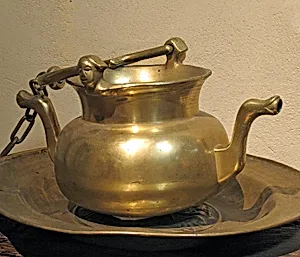
Laver
Unknown Artist
15th century
Medium
Brass
Dimensions
Overall: 7 1/2 x 14 1/2 in. (19.1 x 36.8 cm)
Classification
Metalwork-Brass
Culture
South Netherlandish
Department
The Cloisters
Museum
Metropolitan Museum of Art, New York, NY
Credit
The Cloisters Collection, 1947
Accession Number
47.101.58
Rights
Public Domain
Art Historical Context
This exquisite 15th-century brass, crafted by an unknown South Netherlandish artist,ails from the vibrant metalworking tradition of the southern Netherlands during the late Middle Ages. Measuring just 7½ x 14½ inches, this compact basin—known as a *laver*—was used for ritual handwashing in ecclesiastical settings, such as monasteries or churches, symbolizing purity before sacred rites. Its presence in The Cloisters Collection at the Museum of Art underscores its role in evoking the devotional life of Europe. Brass, a durable alloy of copper and zinc prized for its golden sheen and resistance to corrosion, was a favored medium for liturgical objects in the Low Countries. South Netherlandish artisans excelled in shaping it through techniques like hammering and chasing, producing functional yet elegant pieces that blended utility with subtle artistry. Though details of its decoration remain unnoted, the laver's craftsmanship reflects the region's Gothic-era innovation, where everyday religious tools became testaments to faith and skill. Today, this modest treasure invites visitors to ponder the tactile rituals of medieval worship, bridging the sensory world of the past with our own. Part of The Cloisters' 1947 acquisition, it offers a window into a time when even a simple washbasin embodied spiritual grace.