
Le Caracul (L'Astrakhan)
1860s
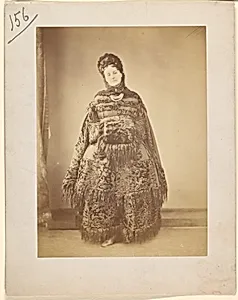
Medium
Albumen silver print from glass negative
Classification
Photographs
Department
Photographs
Museum
Metropolitan Museum of Art, New York, NY
Credit
David Hunter McAlpin Fund, 1975
Accession Number
1975.548.155
Rights
Public Domain
Tags
Art Historical Context
**Le Caracul (L'Astrakhan)**, a captivating albumen silver print from glass negative by Pierre-Louiserson in the 1860s, showcases the elegance of Second Empire fashion. Captured by the renowned Parisian photographer of Mayer & Pierson studio, this portrait likely features a woman adorned in luxurious astrakhan fur—known as caracul—a glossy, tightly curled pelt prized for its opulence and often associated with high society. Pierson's images graced the elite circles of Napoleon III's court, immortalizing Empress Eugénie and her contemporaries in intimate, stylish poses. The albumen process, dominant in mid-19th-century photography, lent these prints their signature warm tones and exquisite detail, making them ideal for cartes de visite—small, collectible portraits exchanged like calling cards. This medium's fragility belies its revolutionary role in democratizing portraiture, turning photography into a fashionable accessory. Housed in The Metropolitan Museum of Art's Photographs Department (David Hunter McAlpin Fund, 1975), *Le Caracul* exemplifies how Pierson blended artistry with commerce, documenting the cultural obsession with fur-trimmed luxury during France's Gilded Age. Visitors will appreciate its glimpse into a world where a simple hat spoke volumes of status and sophistication.
About the Artist
Pierre-Louis Pierson · 1822–1913
Pierre-Louis Pierson (1822–1913) was a pioneering French portrait photographer whose career spanned the formative years of the medium. Born on December 13, 1822, in Hinckange in the Moselle department, Pierson developed an early fascination with photography during the 1840s, as the daguerreotype was still in its infancy. His early life and formal training remain sparsely documented, but by 1844, h...