
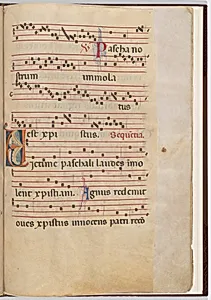
Leaf 6 from an antiphonal fragment
c. 1275
Medium
red and brown ink with decorated initial in tempera and initials in red and blue on vellum
Dimensions
sheet (trimmed): 55.25 × 29.85 cm (21 3/4 × 11 3/4 in.)
Classification
Drawing
Department
CG-E
Museum
National Gallery of Art, Washington, D.C.
Credit
Gift of Mr. Ladislaus and Beatrix von Hoffmann
Accession Number
2009.1.1.11
Rights
Public Domain
Art Historical Context
Step into the luminous world of 13th-century Italian liturgy with *Leaf 6 from an antiphonal fragment*, a precious survivor from around 1275. Antiphonals were large choir books used during Catholic services to guide antiphonal singing—responsorial chants between soloists and the chorus. Crafted by anonymous Italian scribes and artists, this trimmed vellum leaf (55.25 × 29.85 cm) once formed part of a grand volume, likely produced in a monastic scriptorium where monks meticulously copied sacred texts to enhance worship. The artwork showcases medieval manuscript techniques at their finest: red and brown ink for the precise notation and text, accented by a decorated initial in vibrant tempera and smaller initials in red and blue. Vellum, made from animal skin, provided a durable, creamy surface ideal for illumination, while these colors—derived from natural pigments like vermilion and lapis lazuli substitutes—added rhythmic visual harmony. Such decoration elevated plainchant into a multisensory experience, blending art and devotion. Housed in the National Gallery of Art's CG-E Department (gift of Mr. Ladislaus and Beatrix von Hoffmann), this fragment offers a glimpse into Gothic-era book arts, when illuminated manuscripts bridged the oral and written traditions of faith. Its survival underscores the fragility and enduring allure of medieval treasures.