
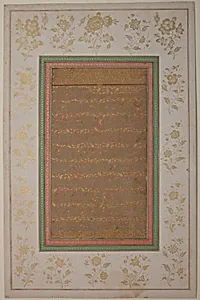
Leaf with Arabic Prayers
dated A.H. 1126/1714 CE
Medium
Ink, opaque watercolor, and gold on paper
Dimensions
H. 9 in. (22.9 cm) W. 5 in. (12.7 cm)
Classification
Codices
Department
Islamic Art
Museum
Metropolitan Museum of Art, New York, NY
Credit
Rogers Fund, 1962
Accession Number
62.152.14
Rights
Public Domain
Tags
Art Historical Context
This delicate leaf from an early 18th-century codex showcases the refined art of Arabic calligraphy, created by the Persian master Ahmad Nairizi in 1714 CE. a single page from a larger manuscript of prayers, it reflects the deep Islamic tradition of combining sacred text with visual beauty. Nairizi, active during the late Safavid period, was renowned for his elegant scripts, and this work exemplifies how calligraphers elevated devotional writing into an act of spiritual reverence. The medium of ink, opaque watercolor, and gold on paper highlights the meticulous techniques of manuscript production in Islamic lands. Gold accents likely illuminate key phrases or borders, drawing the viewer’s eye across the prayers while symbolizing divine light. Measuring just 9 by 5 inches, the leaf’s intimate scale suggests it was meant for personal contemplation, inviting the reader to engage slowly with each carefully formed letter. Preserved in the Metropolitan Museum’s Islamic Art collection, this page underscores calligraphy’s central role in Islamic culture, where the written word serves as both prayer and artistic expression. Its survival offers modern visitors a tangible connection to centuries of devotion and craftsmanship.