
Leaves from an Ashtasahasrika Prajnaparamita Sutra
early 12th century
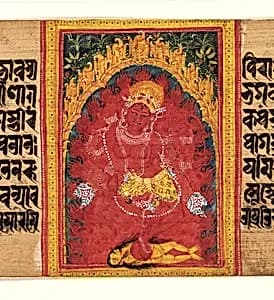
Medium
Opaque watercolor on palm leaf
Dimensions
Page: 2 3/4 x 16 7/16 in. (7 x 41.8 cm) Image: 2 1/2 x 1 15/16 in. (6.4 x 4.9 cm)
Classification
Paintings
Culture & Period
India, West Bengal or Bangladesh · Pala period
Department
Asian Art
Museum
Metropolitan Museum of Art, New York, NY
Credit
Purchase, Lila Acheson Wallace Gift, 2001
Accession Number
2001.445c
Rights
Public Domain
Tags
Art Historical Context
These delicate leaves from the *Ashtasahasrika Prajnaparamita Sutra—a foundational Mahayana Buddhist text known as the "Perfection of Wisdom in Eight Lines"—hail from the Pala period (8th–12th century) in eastern India, likely West Bengal or Bangladesh. Created by the Mahavihara, associated with the renowned monastic scriptoria like those at Nalanda or Vikramashila, they exemplify the Pala school's mastery of miniature painting. During this era, the Pala dynasty fostered a golden age of Buddhist scholarship and art, producing luxurious manuscripts for temple use before the tradition waned under later invasions. Painted in opaque watercolor on slim palm leaves, each page measures just 2¾ x 16½ inches, with vivid images (about 2½ x 2 inches) depicting dancing deities amid intricate borders. This ancient medium—palm leaves inscribed with text and illustrated for ritual recitation—highlights the technical finesse of layering pigments for luminous, jewel-like effects, blending narrative scenes with symbolic motifs of enlightenment. As sacred artifacts, these folios capture the cultural reverence for Prajnaparamita, the goddess of transcendent wisdom, underscoring Buddhism's emphasis on meditation and divine grace. Visitors to the Metropolitan Museum of Art can marvel at how such tiny masterpieces bridged devotion, artistry, and philosophy in medieval India.