
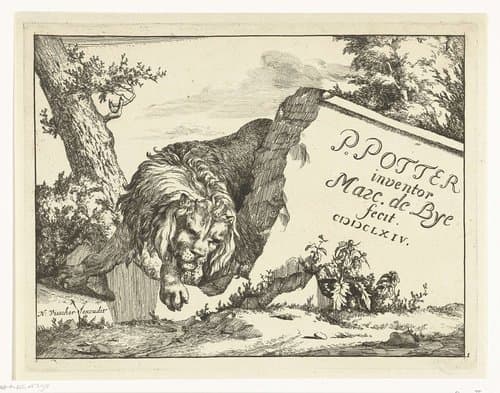
Leeuw bij stenen muur
1664
Medium
etching
Dimensions
173; 225
Rights
Public Domain
About this artwork
ets
Art Historical Context
**Leeuw bij stenen muurLion by a Stone Wall)** Created in 1664 by Dutchcher Marcus de Bye, *Leeuw bij stenen* captures a majestic lion resting against a rugged stone wall. This intimate etching, measuring 173 mm high by 225 mm wide, exemplifies Dutch Golden Age's fascination with the natural world and animal subjects, which symbolized power and nobility. De Bye, active in the mid-17th, specialized in detailed animal prints that brought wild creatures into everyday appreciation, reflecting the era's growing interest in zoology and exotic imports via global trade. Etching, the artwork's medium—denoted simply as "ets" in inventories—allowed De Bye to achieve fine lines and textures through acid-etched metal plates. This technique offered greater freedom than engraving, enabling soft, expressive fur and stone textures that draw viewers into the lion's contemplative gaze. Popular among collectors, such prints democratized access to high art, bridging elite patronage with broader audiences. Though modest in scale, this piece highlights De Bye's skill in rendering lifelike anatomy and atmosphere, contributing to the rich tradition of animalier art in the Netherlands. A timeless study in serenity amid strength, it invites us to ponder the wild's quiet majesty.