
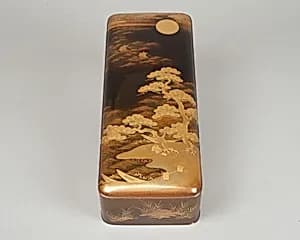
Letter Box (Fubako) with Design of the Shore at Suma
Unknown Artist
19th century
Medium
Gold maki-e on black lacquer
Dimensions
H. 2 5/8 in. (6.7 cm); W. 3 5/8 in. (9.2 cm); D. 9 1/4 in. (23.5 cm)
Classification
Lacquer
Culture & Period
Japan · Edo period (1615–1868)
Department
Asian Art
Museum
Metropolitan Museum of Art, New York, NY
Credit
Gift of David Murray, 1905
Accession Number
05.14.2a, b
Rights
Public Domain
Tags
Art Historical Context
This delicate *Letter Box (Fubako) with of the Shore at S* is a masterpiece of Edo-period (1615–1868) Japanese craftsmanship, created in the 19th century. Measuring just 2⅝ × 3⅝ × 9¼ inches, this portable black lacquer box was to hold letters or documents, blending everyday utility with artistic elegance. Produced during Japan's Tokugawa era—a time of relative peace and cultural flourishing—such fubako exemplified the refined tastes of the samurai and merchant classes. The box's surface is adorned with gold *maki-e*, a revered lacquer technique where finely powdered gold is sprinkled onto wet lacquer, then polished to a luminous sheen. This method, perfected over centuries, creates a shimmering effect that catches the light, highlighting the serene shoreline scene of Suma—a celebrated coastal spot from classical literature like *The Tale of Genji*. Delicate boats glide amid stylized trees, evoking tranquility and the beauty of nature. As a gift to the Metropolitan Museum of Art in 1905, this piece showcases the technical virtuosity of anonymous Edo artisans, whose lacquerware rivaled painting in prestige. Visitors can appreciate how it transformed a simple container into a poetic treasure, bridging function, folklore, and opulent artistry.