
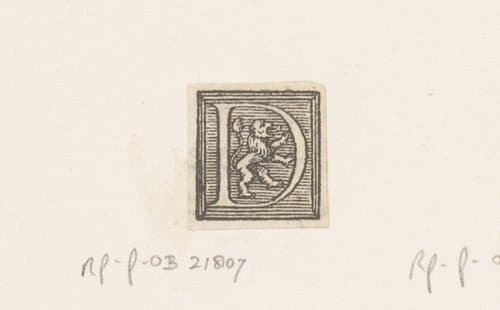
Letter D: leeuw
Medium
letterpress printing
Dimensions
15; 15
Rights
Public Domain
About this artwork
blad: hoogte 15 mm x breedte 15 mm
Art Historical Context
Behold the intricate "Letter D: lee" (Dutch for "lion"), a diminutive masterpiece of 16th-century typography measuring just 15 mm by 15 mm. Crafted through letterpress printing in 6, this anonymous work draws attribution to the renowned Renaissance artist Hans Holbein the Younger (14971543), whose innovative designs influenced printed ornamentation long after his death. Nestled within the bold form of the capital D prowls a fierce lion, embodying strength and nobility in a compact, dynamic composition. Holbein's style, rooted in the Northern Renaissance, blended meticulous detail with grotesque and symbolic motifs, often seen in his woodcut designs for books and printers' marks. Though produced posthumously, this letter reflects his legacy in decorative initials—small woodblocks or metal cuts inserted into pages of Bibles, prayer books, and scholarly texts. Letterpress printing, a revolutionary technique pioneered by Gutenberg a century earlier, allowed such vignettes to be precisely inked and impressed, revolutionizing book illustration and making ornate decoration accessible. Culturally, these tiny emblems highlight the era's fusion of art and craftsmanship, where heraldry like the lion symbolized power in European courts and texts. A testament to enduring ingenuity, "Letter D: leeuw" invites visitors to appreciate how Renaissance innovation turned the mundane alphabet into a gallery of miniature wonders.