
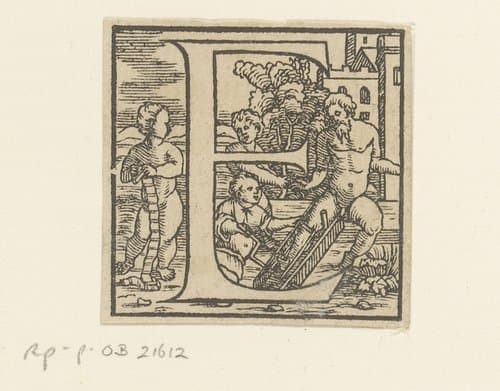
Letter E: kinderen spalken het been van een man
Medium
paper
Dimensions
42; 42
Rights
Public Domain
About this artwork
height 42 mm x width 42 mm
Art Historical Context
**Letter E: kinderen spalken het been van een man** (1543) is a delicate engraving on paper, attributed to the anonymous artist Jan Stefan van Calcar, measuring a mere 42 mm by 42 mm. Created during the Renaissance, this tiny work showcases the precision of early printmaking techniques, where fine lines and shading captured intricate details on a miniature scale—ideal for books or portable study aids. The title, translating from Dutch as "Letter E: Children Splinting a Man's Leg," depicts young figures aiding in a practical medical procedure: immobilizing an injured limb with splints. Van Calcar, a Flemish engraver (c. 1499–1546), is best known for his anatomical woodcuts in Andreas Vesalius's revolutionary *De humani corporis fabrica* (1543), which challenged ancient medical dogma through direct observation. This scene likely reflects the era's emphasis on hands-on healing and education, blending everyday caregiving with emerging anatomical accuracy. Its cultural significance lies in democratizing medical knowledge during a time of scientific awakening. As part of a possible alphabetic series—"Letter E" suggests instructional vignettes—this print highlights children's roles in community health, underscoring Renaissance humanism's focus on practical skills and empirical learning. A charming window into 16th-century life!