
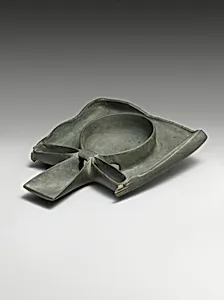
Libation Dish Depicting Ka-Arms Presenting an Ankh-Sign
Unknown Artist
ca. 3100–2900 B.C.
Medium
Greywacke
Dimensions
w. 14.5 x h. (depth) 3.5 x l. 17.6 cm (5 11/16 x 1 3/8 x 6 15/16 in.)
Classification
Dish, libation
Period
Early Dynastic Period
Department
Egyptian Art
Museum
Metropolitan Museum of Art, New York, NY
Credit
Rogers Fund, 1919
Accession Number
19.2.16
Rights
Public Domain
Tags
Art Historical Context
Hailing from Egypt's Early Dynastic Period (ca. 3100–2900 B.C.), during Dynasty 1, this libation dish exemplifies the dawn of pharaonic civilization, a time when unified kingdoms formalized rituals and iconography. Crafted fromywacke—a durable, shadowy grey stone prized for its fine grain and prestige—this shallow vessel (14.5 x 3.5 x 17.6 cm) was designed for pouring offerings of water, milk, or wine in temple or funerary rites, the eternal sustenance of gods or the deceased. At its center, stylized ka-arms—elongated limbs symbolizing the ka, the vital life force—extend reverently to present the ankh, the iconic cross-like emblem of life. This motif blends hieroglyphic precision with symbolic potency, invoking divine vitality and protection. Carved with meticulous low relief, the design reflects early mastery of stoneworking, where every line served both aesthetic and magical purposes. Acquired through the Rogers Fund in 1919, this dish from the Metropolitan Museum of Art's Egyptian collection offers a window into ancient beliefs: offerings like these bridged the living and eternal realms, underscoring the Egyptians' profound preoccupation with life beyond death. A humble yet profound artifact, it captures the spiritual heartbeat of one of history's greatest civilizations.