
Lieuwe Willemsz. Graaf
1680 - 1700
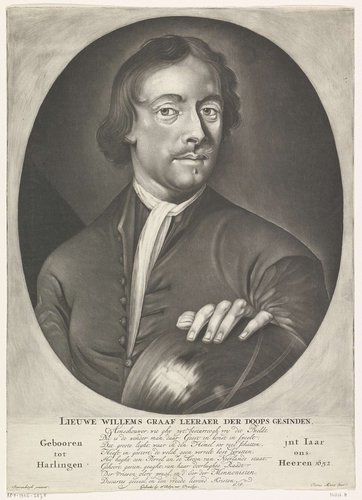
Medium
engraving
Dimensions
264; 314
Rights
Public Domain
About this artwork
mezzotint en gravure
Art Historical Context
This engraving by Petrus Aeneae portrays Lieuwe Willemsz. Graaf, a figure likely of note in late seventeenth-century Dutch society. Created between 1680 and 1700, the work measures 314 by 264 millimeters and employs a combination of mezzotint and engraving techniques, known in period descriptions as “mezzotint en gravure.” These methods allowed artists to achieve both velvety tonal gradations and crisp linear detail, making the medium especially effective for portraiture. Mezzotint, developed in the mid-seventeenth century, was prized for its ability to reproduce the subtle textures of fabric, hair, and skin—qualities that would have given this print a lively, almost painterly presence. Aeneae’s choice of this hybrid approach reflects the technical sophistication of Dutch printmakers during the final decades of the Golden Age, when such works circulated widely as affordable alternatives to paintings. Though details of the sitter remain sparse, the print’s scale and refinement suggest it served both commemorative and documentary purposes, preserving the likeness of an individual for a broader audience. Today it offers viewers a window into the era’s visual culture and the enduring appeal of printmaking as an art form.