
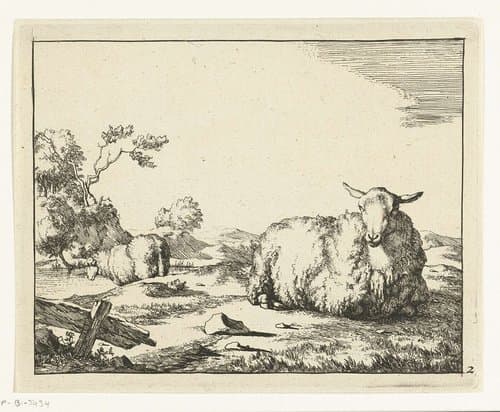
Liggend schaap, hekje op voorgrond
1664
Medium
etching
Dimensions
117; 146
Rights
Public Domain
About this artwork
height 117 mm x width 146 mm
Art Historical Context
Behold the delicate etching *Liggend schaap, hekje op voorgrond* (Reclining Sheep, Fence in Foreground) by Dutch artist Marcus de Bye, created in 1664. Measuring a modest 117 mm high by 146 mm wide, this intimate print invites visitors to lean in and savor its pastoral charm. De Bye, active during the Dutch Golden Age, captured everyday rural scenes with a keen eye for nature's quiet beauty. Etching, the medium of choice here, exemplifies 17th-century printmaking innovation. By scratching through a wax ground on a metal plate and immersing it in acid, artists like de Bye achieved fluid, expressive lines that evoke the soft curve of a resting sheep's wool and the sturdy texture of a foreground fence. This technique allowed for detailed reproductions, making fine art accessible beyond paintings. In the context of the Netherlands' prosperous era, such works reflect a cultural appreciation for the countryside and livestock, symbols of agricultural wealth. De Bye's etching stands as a testament to the era's masterful graphic arts, offering a serene window into 17th-century life.