
Lobster, Hamayumi (Ceremonial Miniature Bow) with Arrows and Fans
18th–19th century
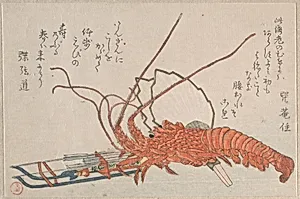
Medium
Woodblock print (surimono); ink and color on paper
Dimensions
5 1/4 x 7 7/8 in. (13.3 x 20 cm)
Classification
Prints
Culture
Japan
Department
Asian Art
Museum
Metropolitan Museum of Art, New York, NY
Credit
H. O. Havemeyer Collection, Bequest of Mrs. H. O. Havemeyer, 1929
Accession Number
JP2221
Rights
Public Domain
Tags
Art Historical Context
In the late Edo period (18th19th century), Japanese artist Kubo Shunman this charming *surimono*—a luxurious, privately commissioned woodblock print often produced for New Year's greetings or. Measuring just 5¼ × 7⅞ inches, this intimate work in ink and color on paper exemplifies refined techniques of ukiyo-emaking, where intricate carving and precise color layering brought ephemeral scenes to life. Shun, a versatile master known for his poetic and playful compositions, elevated surimono with subtle embossing and vibrant hues, making them coveted keepsakes among the literati. At the heart of the print is a whimsical lobster paired with a *hamayumi*—a ceremonial miniature bow—alongside arrows and fans. The lobster, a symbol of longevity and festivity in Japanese culture (evoking good fortune with its enduring shell and auspicious red tones when boiled), anchors this lighthearted tableau. These objects blend martial elegance with seasonal joy, perhaps nodding to archery traditions or courtly pastimes, rendered in Shunman's delicate, flowing lines that infuse everyday motifs with poetic grace. Now housed in the Metropolitan Museum of Art's Asian Art Department as part of the H.O. Havemeyer Collection (1929), this print offers a window into Japan's vibrant print culture, where art bridged the worlds of poetry, performance, and personal celebration. A true gem for admirers of Edo whimsy!
About the Artist
Kubo Shunman · 1757–1820
Japanese, 1757–1820