
蓮花|Lotus
Unknown Artist
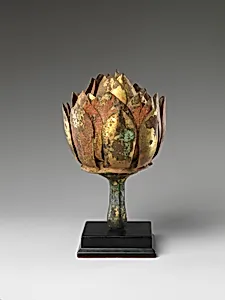
Medium
Gilt bronze
Dimensions
Overall: H. 4 in. (10.2 cm); Diam. 4 1/4 in. (10.8 cm) Overall (with stand): H. 6 3/8 in. (16.2 cm)
Classification
Metalwork
Culture & Period
China · Tang dynasty (618–907)
Department
Asian Art
Museum
Metropolitan Museum of Art, New York, NY
Credit
Rogers Fund, 1922
Accession Number
22.79.11a, b
Rights
Public Domain
Art Historical Context
This exquisite gilt bronze lotus blossom, titled *蓮花* (Lotus), hails from China's Tang dynasty (618–), a golden era of innovation and cultural flourishing. Standing just4 inches tall (with a base reaching ⅜ inches), this delicatework captures the flower's layered petals in intricate detail, its surface gilded for a luminous golden sheen that evokes the sacred purity of the lotus in bloom. Crafted by an unknown artist, it exemplifies Tang metalworking techniques, where bronze was cast and meticulously overlaid with gold mercury amalgam, fired to create enduring opulence. In Tang China, lotuses held profound Buddhist symbolism, representing enlightenment rising from muddy waters—purity amid imperfection. Such small-scale sculptures often adorned altars, served as ritual offerings, or functioned as finials on larger Buddhist artifacts, reflecting the dynasty's cosmopolitan embrace of Buddhism amid Silk Road influences. The Rogers Fund acquisition in 1922 brought this treasure to the Metropolitan Museum of Art's Asian Art collection, where it stands as a testament to Tang craftsmanship's technical mastery and spiritual depth. Today, visitors marvel at its compact elegance, a window into an age when art bridged the divine and the everyday, inviting contemplation of nature's transcendent beauty.