
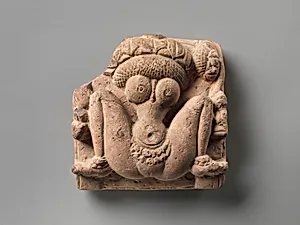
Lotus-Headed Fertility Goddess Lajja Gauri
Unknown Artist
ca. 6th century
Medium
Sandstone
Dimensions
H. 4 1/16 in. (10.3 cm); W. 4 1/16 in. (10.3 cm)
Classification
Sculpture
Culture
India (Madhya Pradesh)
Department
Asian Art
Museum
Metropolitan Museum of Art, New York, NY
Credit
Samuel Eilenberg Collection, Bequest of Samuel Eilenberg, 1998
Accession Number
2000.284.13
Rights
Public Domain
Tags
Art Historical Context
Behold the delicate *Lotus-Headed Goddess Lajja G*, a petite sandstone sculpture from 6th-century India (Madhya Pradesh), standing just over 4 inches tall. Carved by an unknown artist during the Post-Gupta period, this rare piece captures the goddess in a form symbolizing abundance and renewal. Her lotus-blossom head evokes purity and cosmic creation, a motif rooted in Hindu iconography where the lotus represents divine emergence from primordial waters. Lajja Gauri, "Shy Gauri," embodies fertility and the life-giving power of womanhood, often linked to rituals celebrating birth and prosperity. Crafted from durable sandstone—a favored medium for enduring temple and shrine carvings—this small-scale work suggests it was likely used in private devotion or household worship, highlighting the intimate spirituality of post-Gupta Hindu culture. The meticulous detailing reflects advanced stoneworking techniques, blending realism with symbolic abstraction. Housed in the Metropolitan Museum of Art's Asian Art Department as part of the Samuel Eilenberg Collection, this artifact offers a window into ancient India's reverence for feminine divinity, reminding us of timeless themes of growth and modesty amid profound sacred power.