
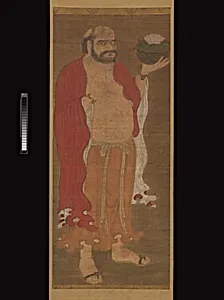
元 佚名 羅漢像 軸|Luohan
late 13th–early 14th century
Medium
Hanging scroll; ink and color on silk
Dimensions
Image: 44 1/4 x 19 5/16 in. (112.4 x 49.1 cm) Overall with mounting: 78 x 20 3/8 in. (198.1 x 51.8 cm) Overall with knobs: 78 x 22 in. (198.1 x 55.9 cm)
Classification
Paintings
Culture & Period
China · Yuan dynasty (1271–1368)
Department
Asian Art
Museum
Metropolitan Museum of Art, New York, NY
Credit
Purchase, Seymour Fund and Bequest of Dorothy Graham Bennett, 1984
Accession Number
1984.226
Rights
Public Domain
Tags
Art Historical Context
This captivating hanging scroll, titled *Luohan* and created by an unidentified artist during China's Yuan dynasty (late 13th– 14th century), one of the revered Arhats—enlightened disciples of the Buddha as Luohan in Chinese Buddhism. Rendered in ink and color on silk, a luxurious medium favored for its luminous sheen and fine detail, the painting exemplifies the elegant, elongated proportions and subtle shading typical of Yuan-era Buddhist art. Measuring about 44 x 19 inches in the image alone, it was designed for vertical display, unrolling to reveal meditative figures amid symbolic motifs like lotuses, evoking purity and spiritual enlightenment. During the Mongol-ruled Yuan period (1271–1368), Buddhist themes flourished, blending Han Chinese traditions with Tibetan influences due to imperial patronage. Luohan paintings like this one gained popularity for their lifelike, individualized depictions of these ascetic saints, often shown as eccentric hermits with expressive faces and dynamic poses. This anonymous work, now in the Metropolitan Museum of Art's Asian Art collection, highlights the era's mastery of layered inks and vibrant mineral pigments, inviting viewers to contemplate the Luohan's serene wisdom and the interplay of human form with nature's emblems. (198 words)