
Magic rod fragment
Unknown Artist
ca. 1981–1640 B.C.
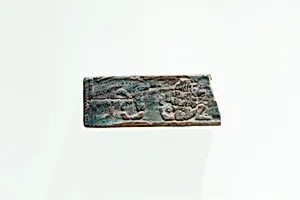
Medium
Steatite, green glazed
Dimensions
L. 2.6 cm (1 in.); W. 1.2 cm (1/2 in.); H. 1 cm (3/8 in.)
Classification
Magic rod
Period
Middle Kingdom
Department
Egyptian Art
Museum
Metropolitan Museum of Art, New York, NY
Credit
Rogers Fund and Edward S. Harkness Gift, 1922
Accession Number
22.1.565
Rights
Public Domain
Art Historical Context
This delicate fragment of a "magic rod," crafted from green-glazed steatite during Egypt's Middle Kingdom (ca. 1981–1640 B.C., Dynasties 12–13), offers a glimpse into the ancient Egyptians' rich world of protective magic. Measuring just 2.6 cm long, it is a small but potent artifact, likely part of a slender rod or wand used in rituals to ward off evil spirits, snakes, or supernatural threats. Steatite, a soft soapstone, was ideal for intricate carving, and its vibrant green glaze—evoking the fertile Nile and rebirth—enhanced its mystical power, mimicking the prized blue-green faience of temple offerings. In the Middle Kingdom, a era of renewed stability and artistic refinement after chaotic times, such rods were wielded by priests, healers, or midwives during ceremonies invoking deities like Bes or Taweret for safeguarding the vulnerable, especially children. Though incomplete, this piece from the Metropolitan Museum of Art (Rogers Fund and Edward S. Harkness Gift, 1922) exemplifies everyday religious devotion, blending craftsmanship with profound cultural beliefs in amulets' apotropaic (evil-repelling) role. Its survival underscores the enduring allure of Egyptian magic, reminding us how ordinary objects carried extraordinary spiritual weight in daily life.