
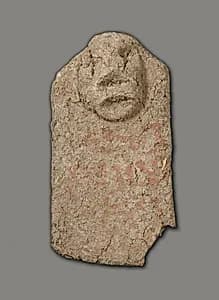
Magical Figure
Unknown Artist
ca. 1802–1550 B.C.
Medium
Clay (unfired)
Dimensions
H. 6.8 cm (2 11/16 in.); W. 3.5 cm (1 3/8 in.)
Classification
figure, magical, execration, tablet
Period
Late Middle Kingdom–Second Intermediate Period
Department
Egyptian Art
Museum
Metropolitan Museum of Art, New York, NY
Credit
Rogers Fund, 1933
Accession Number
33.1.97
Rights
Public Domain
Tags
Art Historical Context
This enchanting "Magical Figure," crafted from unfired clay around 1802–1550 B.C., hails from Egypt's Late Middle Kingdom to Second Intermediate Period (Dynasty 13– Intermediate Period). Standing just 6.8 cm tall and 3.5 cm wide, this diminutive artifact captures the essence of ancient Egyptian folk art, with its simple, expressive face hinting at human-like features. Acquired through the Rogers Fund in 1933, it now resides in the Metropolitan of Art's Egyptian Art. During a time of political fragmentation and transition in Egypt—marked by the decline of centralized pharaonic power and the emergence of regional rulers—these small clay figures served vital magical and protective roles. Likely used in rituals, household shrines, or tombs, they embodied apotropaic powers to ward off evil spirits, ensure fertility, or safeguard the owner in the afterlife. The unfired clay medium, soft and perishable, underscores their ephemeral, personal nature, contrasting with the grand stone monuments of elite art. Artistically, the figure reflects the period's shift toward more intimate, schematic styles, prioritizing symbolic function over realism. Its modest modeling technique—pinched and smoothed by hand—highlights everyday creativity amid societal upheaval, offering a window into the beliefs of ordinary Egyptians. A testament to enduring spiritual traditions, this piece invites us to ponder the magic woven into daily life millennia ago.