
Magical Stela (Cippus of Horus)
Unknown Artist
360–343 B.C.
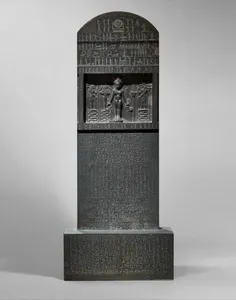
Medium
Meta-Greywacke
Dimensions
Overall H. 83.5 cm (32 7/8 in.); W. 33.5 cm (13 3/16 in.); D. 7.2 cm (2 13/16 in.); Base: H. 14.4 cm ( 5 11/16 in.); W. 33.5 cm (13 3/16 in.); D. 14.4 cm (5 11/16 in.)
Classification
Cippus, Cippus of Horus; Metternich
Period
Late Period
Department
Egyptian Art
Museum
Metropolitan Museum of Art, New York, NY
Credit
Fletcher Fund, 1950
Accession Number
50.85
Rights
Public Domain
Tags
Art Historical Context
This Magical Stela, also known as a Cippus of Horus, dates to Egypt’s Late Period during Dynasty 30 (360–343 B.C.). Carved from durable meta-greywacke, the tall, slender slab measures just over 83 centimeters in height and features intricate hiers alongside images of the Horus, Isis and Bes. Such stelae were created as protective objects, their surfaces covered with spells and divine figures meant to channel divine power. In ancient Egyptian belief, these magical stelae served both practical and devotional purposes, often placed in homes or temples to safeguard against illness and harmful forces. The presence of Horus and Isis reflects the enduring importance of divine protection and motherhood in Egyptian religion, while Bes, the household guardian, adds a layer of everyday spiritual care. The choice of hard stone ensured the carvings would endure for generations, preserving the sacred texts and imagery for continued ritual use. Today, this finely worked example in the Metropolitan Museum of Art offers visitors a direct connection to the artistic and spiritual traditions of the final centuries of native Egyptian rule. Its detailed reliefs and inscriptions highlight the skill of Late Period artisans in combining text, image, and stone to create objects of lasting potency.