
Magnolia cup
Unknown Artist
late 18th century
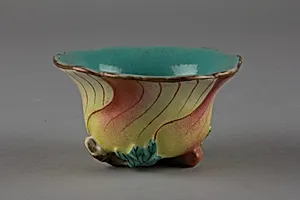
Medium
Porcelain painted in overglaze polychrome enamels (Jingdezhen ware)
Dimensions
H. 1 5/8 in. (4.1 cm); Diam. 3 in. (7.6 cm)
Classification
Ceramics
Culture & Period
China · Qing dynasty (1644–1911), Qianlong period (1736–95)
Department
Asian Art
Museum
Metropolitan Museum of Art, New York, NY
Credit
Purchase by subscription, 1879
Accession Number
79.2.1315
Rights
Public Domain
Art Historical Context
This delicate **Magnolia cup**, created by an unknown artist in the 18th century during Qianlong period (1736–95) of China's Qing dynasty (1644–1911), exemplifies the unparalleled craftsmanship of Jingdezhen porcelain. Standing just 1 5/8 inches high and 3 inches in diameter, this petite ceramic vessel was painted in overglaze polychromeels, a technique that applied vibrant, multicolored designs after the initial firing. The result is a luminous surface with finely detailed magnolia motifs, showcasing the translucency and purity for which Jingdezhen ware—China's imperial porcelain capital—was world-renowned. Jingdezhen kilns reached their zenith under Emperor Qianlong, producing wares for the court and export that blended technical innovation with elegant restraint. Overglaze enameling allowed for intricate, lifelike floral patterns fired at lower temperatures, preserving delicate hues without distorting the porcelain's glassy sheen. Such cups were likely used for tea or wine, reflecting the refined rituals of elite Chinese society. Acquired by the Metropolitan Museum of Art through a purchase in 1879, this treasure invites visitors to appreciate the Qing dynasty's artistic legacy—a harmonious fusion of form, function, and natural beauty that continues to captivate.