
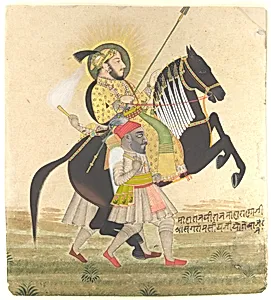
Maharana Sangram Singh Riding a Prize Stallion
ca. 1712
Medium
Ink, opaque watercolor, gold, and Basra pearls on paper
Dimensions
8 1/4 x 7 1/2 in. (21 x 19 cm)
Classification
Paintings
Culture
India (Rajasthan, Mewar)
Department
Asian Art
Museum
Metropolitan Museum of Art, New York, NY
Credit
Cynthia Hazen Polsky and Leon B. Polsky Fund, 2004
Accession Number
2004.403
Rights
Public Domain
Tags
Art Historical Context
This exquisite miniature painting, *Maharana Sangram Singh Riding a Prize Stallion*, created around 1712 by the Stipple Master and Jai Ram, captures the grandeur of Rajasthan's Mewar kingdom. From the vibrant Rajput painting tradition of India, it depicts Maharana Sangram Singh II, a powerful Rajput ruler, astride his magnificent stallion. Measuring just 8¼ x 7½ inches, this intimate work was likely produced in the royal atelier of Udaipur, Mewar's capital, where artists celebrated the valor and prestige of their patrons through such equestrian portraits. The artwork's historical significance lies in its portrayal of royal authority and martial prowess—horses symbolized power and conquest in Rajput culture, often featured in courtly scenes to glorify rulers like Sangram Singh, who reigned during a period of political intrigue and artistic flourishing. Mewar paintings, known for their bold colors and dynamic compositions, emphasized the sitter's nobility amid stylized landscapes. Artistically, the piece shines through its masterful use of ink, opaque watercolor, gold, and rare Basra pearls on paper. The stipple technique—fine dotted shading—adds texture and depth to the horse's glossy coat and the maharana's ornate attire, while gold leaf evokes divine radiance and pearls lend opulent sparkle, underscoring the painting's status as a luxury object for elite collectors. A true gem of Asian Art at The Metropolitan Museum of Art.