
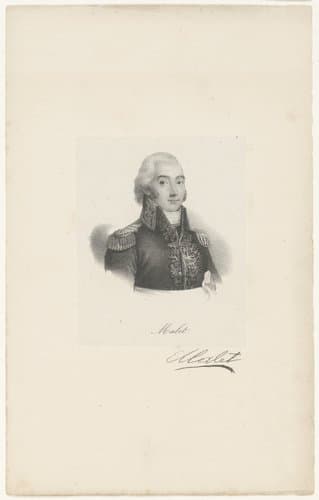
Malet
in of na 1818 - in of voor 1842
Medium
lithography
Dimensions
280; 176
Rights
Public Domain
About this artwork
blad: hoogte 280 mm x breedte 176 mm
Art Historical Context
**Malet** is a striking lithograph from the early 19th century, anonymously but published by the workshop of *veuve Delpech (Naudet)*—likely the widow of the French lithographer François Séraphin Delpech, who continued his influential Paris studio after his death in 1825. Dated sometime between 1818 and1842, this print measures 280 mm high by 176 mm wide, capturing the era's fascination with affordable, reproducible imagery. The title "Malet" suggests a portrait or depiction of a notable figure, possibly alluding to historical events or personalities from Napoleonic France. Lithography, the medium here, revolutionized printmaking around 1800 by allowing artists to draw directly on limestone slabs with greasy crayons, transferring ink evenly without raised plates. This technique enabled intricate details and tonal gradations, making high-quality portraits and illustrations accessible to a broader audience. Veuve Delpech's firm specialized in such works, producing lithographs of celebrities, military heroes, and caricatures that fueled Europe's growing print culture. As a window into post-Revolutionary France, *Malet* reflects lithography's role in democratizing art, preserving likenesses amid political upheaval. Though details on the subject remain elusive, its preservation highlights the enduring appeal of this innovative process in documenting 19th-century life.