
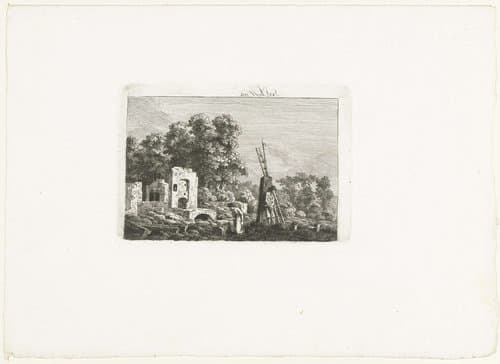
Man en vrouw bij resten van hun verbrande huis
1802-09-21
Medium
etching
Dimensions
250; 92; 137; 285
Rights
Public Domain
About this artwork
Een man en vrouw staan treurend bij de resten van hun huis dat door brand zwaar beschadigd is.
Art Historical Context
Created in 1802, Caspar David Friedrich’s etching “Man en vrouw bij resten van hun verbrande huis” captures a poignant moment of loss. A man and woman stand quietly before the charred remnants of their home, their postures conveying quiet grief. At just 92 by 137 millimetres, the small print draws viewers into an intimate scene of human vulnerability. Friedrich, a leading voice in German Romanticism, often explored themes of transience and nature’s overwhelming power. This early etching reflects those concerns through the stark contrast between fragile human structures and destructive forces. The medium itself—etching—allowed the artist to render fine details of smoke-stained beams and scattered debris with delicate precision, inviting quiet contemplation rather than dramatic spectacle. Though modest in scale, the work foreshadows Friedrich’s lifelong interest in ruins as symbols of memory and resilience. It offers museum visitors a moving glimpse into the emotional depth that would define his later, larger landscapes.
About the Artist
Caspar David Friedrich · 1774–1840
Leading artist of the German Romantic movement. He was particularly known for his symbolic and atmospheric treatment of landscape.