
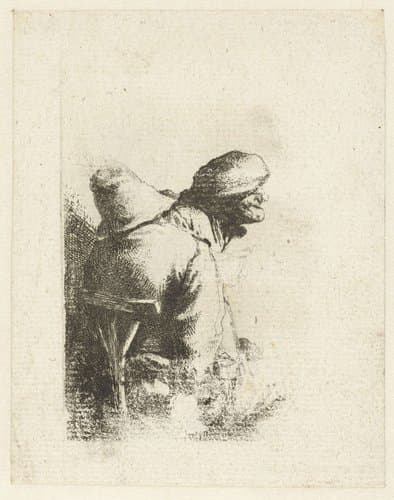
Man zittend op rug gezien, vrouwen- of mannenhoofd met muts
1642 - 1664
Medium
etching
Dimensions
49; 76
Rights
Public Domain
About this artwork
ets
Art Historical Context
Cornelis Pietersz. Bega (c. 1620–1664), a Dutch Golden Age artist from Haarlem, was renowned for his lively etchings and paintings depicting everyday peasants and genre scenes, often infused with humor and keen observation. Influenced by masters like Rembrandt and Adriaen van Ostade, Bega captured the rustic charm of 17th-century Dutch life during a period of cultural flourishing, when printmaking became a vital medium for disseminating art to a wider audience. This etching, titled *Man zittend op gezien, vrouwen- of mannenhoofd met muts* (Man Sitting Seen from the Back, Woman's or Man's Head with Cap), dates to between 1642 and 1664, reflecting Bega's mature style. Measuring just 76 mm high by 49 mm wide, this intimate etching showcases Bega's mastery of the technique. Etching, involving acid biting into a metal plate to create fine lines, allowed for rich tonal contrasts and expressive detail—perfect for Bega's focus on textures like fabric folds in the cap or the curve of the seated figure's back. The ambiguous gender of the head adds intrigue, inviting viewers to ponder identity in humble, everyday subjects. As a window into Dutch social life, the work highlights the era's fascination with ordinary folk, blending realism with subtle caricature. Bega's prints were collectible gems, bridging fine art and popular culture in the bustling art markets of the time.