
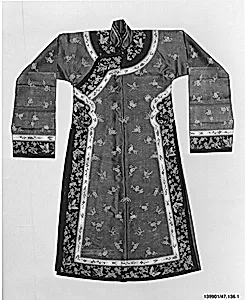
Manchu Woman's Informal Robe
Unknown Artist
late 19th–early 20th century
Medium
Silk
Dimensions
Overall: 57 x 81 1/8 in. (144.8 x 206.1 cm)
Classification
Costumes-Embroidered
Culture & Period
China · Qing dynasty (1644–1911)
Department
Asian Art
Museum
Metropolitan Museum of Art, New York, NY
Credit
Anonymous Gift, 1947
Accession Number
47.136.1
Rights
Public Domain
Tags
Art Historical Context
This elegant Manchu Woman’s Informal Robe, created in China during the late Qing dynasty, offers a glimpse into the refined daily attire of elite women in the final decades of imperial rule. Worn for informal occasions, such garments reflected the Manchu heritage of the ruling court while incorporating Han Chinese aesthetic influences. Its generous proportions—measuring over feet in length—allowed the silk to drape gracefully, emphasizing both comfort and status in a period when clothing still signaled ethnic identity and social position. Crafted from lustrous silk and classified as embroidered costume, the robe showcases the meticulous needlework traditions that flourished in late-19th- and early-20th-century China. Delicate butterfly motifs, visible among the decorative elements, carried auspicious meanings of joy, transformation, and marital happiness. Such embroidery required skilled artisans and highlighted the wearer’s refinement, blending practical garment construction with symbolic artistry. Acquired by the Metropolitan Museum of Art in 1947 as an anonymous gift, this robe stands as a tangible record of Qing fashion on the cusp of modernity, preserving the intricate textile techniques and cultural symbolism of a vanishing imperial world.