
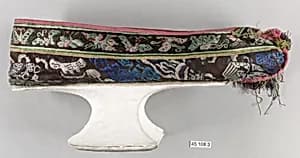
Manchu Woman's Shoe
Unknown Artist
late 19th–early 20th century
Medium
Silk, wood(?)
Dimensions
10 1/2 x 10 1/2 in. (26.67 x 26.67 cm)
Classification
Costumes-Woven
Culture & Period
China · Qing dynasty (1644–1911)
Department
Asian Art
Museum
Metropolitan Museum of Art, New York, NY
Credit
Gift of Mrs. Charles Albert Perkins, 1945
Accession Number
45.108.3
Rights
Public Domain
Art Historical Context
Step into the elegant world of Qing dynasty fashion with this *Manchu Woman's Shoe a delicate artifact from late 19th– to early 20th-century. Crafted during the final decades of the Qing period (1644–1911), when the Manchu rulers imposed their distinct cultural styles on the empire, this shoe measures a square 10½ x 10½ inches (26.67 x 26.67 cm). Its of silk—likely intricately woven and embroidered—paired with a possible wooden platform base, exemplifies the opulent textiles prized in imperial costume traditions. Manchu women, from the ethnic group that founded the Qing dynasty, favored elevated platform shoes like this one, known as "flowerpot" or *hua xie*. These designs elevated the heel dramatically, creating a stylized gait that echoed the bound feet of Han Chinese women without the practice itself—a clever fusion of status, mobility, and Manchu identity amid strict sumptuary laws regulating dress. The woven silk upper would have been richly adorned, showcasing the era's masterful embroidery techniques that blended functionality with artistry. Today, this rare survivor graces the Metropolitan Museum of Art's Asian Art Department, a gift from Mrs. Charles Albert Perkins in 1945. It offers a tangible glimpse into the gendered splendor of late imperial China, reminding us how everyday objects carried profound cultural weight.