
Mantle Fragment
Unknown Artist
12th–15th century
Medium
Cotton, camelid hair
Dimensions
Overall: 24 1/4 x 27 1/2 in. (61.6 x 69.85 cm) Other: 24 1/4 in. (61.6 cm)
Classification
Textiles-Woven
Culture
Chimú
Department
Arts of Africa, Oceania, and the Americas
Museum
Metropolitan Museum of Art, New York, NY
Credit
Gift of George D. Pratt, 1933
Accession Number
33.149.99
Rights
Public Domain
Tags
Art Historical Context
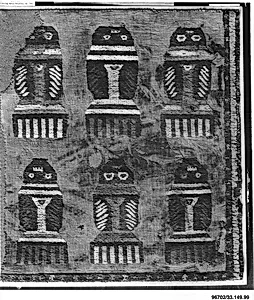
This exquisite *Mantle Fragment* from Chimú culture of ancient Peru (12th–15th century offers a glimpse into the mastery of pre-Columbian textile arts. The Chimú, who flourished along Peru's northern coast during the Late Intermediate Period, were renowned for their sophisticated weaving techniques and vibrant garments. Mantles like this one served as elite status symbols, often worn by nobility in ceremonies or daily life, adorning the body with intricate patterns that conveyed cultural and spiritual significance. Woven from cotton and fine camelid hair—likely from alpacas or llamas—this fragment measures about 24¼ x 27½ inches, showcasing the Chimú's skill in complementary warp weaving. Threads of dyed fibers create bold, repeating motifs, including striking owl figures highlighted in the tags. Owls, with their nocturnal mystique, may symbolize wisdom, the night world, or supernatural forces in Andean cosmology, though exact meanings remain interpretive. The use of camelid hair added durability, warmth, and a luxurious sheen, making these textiles prized possessions. Today, this piece, a 1933 gift to the Metropolitan Museum of Art from George D. Pratt, resides in the Arts of Africa, Oceania, and the Americas department. It exemplifies how Chimú weavers transformed humble fibers into storytelling masterpieces, bridging art, identity, and ritual in a thriving coastal empire.