
Manuscript Leaves Fragment
Unknown Artist
4th–7th century
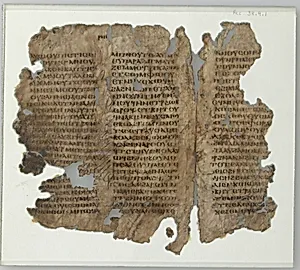
Medium
Ink on parchment
Dimensions
Overall: 7 1/4 x 8 1/16 in. (18.4 x 20.5 cm) Framed: 8 1/16 x 9 1/16 in. (20.5 x 23 cm)
Classification
Manuscripts and Illuminations
Culture
Coptic
Department
Medieval Art
Museum
Metropolitan Museum of Art, New York, NY
Credit
Gift of H.E. Winlock, 1938
Accession Number
38.9.1
Rights
Public Domain
Tags
Art Historical Context
This delicate fragment of manuscript leaves, crafted by an unknown artist between the 4th and 7th, offers a rare glimpse into the world of early Coptic Christianity in Egypt. Housed in the Metropolitan Museum of Art's Medieval Art department as part of its Manuscripts and Illuminations collection, the piece measures just 7¼ x 8⅛ inches and was generously gifted by H.E. Winlock in 1938. Written in ink on parchment—animal skin prepared for writing—this modest survivor exemplifies the transition from papyrus scrolls to the more durable codex format, revolutionizing bookmaking in the ancient world. Coptic culture, emerging after Egypt's pharaonic era, fused indigenous traditions with burgeoning Christianity, and such manuscripts often preserved sacred texts, hymns, or liturgical documents. The use of ink on parchment here highlights masterful scribal techniques: precise lettering in an uncial script, designed for readability in dimly lit monasteries or churches. Though fragmented, it whispers of monastic scriptoria where monks labored to copy scriptures, safeguarding knowledge amid political upheavals like the Arab conquests. For visitors, this artifact bridges antiquity and faith, reminding us how everyday materials carried profound spiritual weight. Its survival underscores the resilience of Coptic heritage, a vibrant thread in the tapestry of early medieval art.