
Maria Theresia van Oostenrijk (1717-80), aartshertogin van Oostenrijk, koningin van Hongarije en Bohemen, Rooms-Duits keizerin
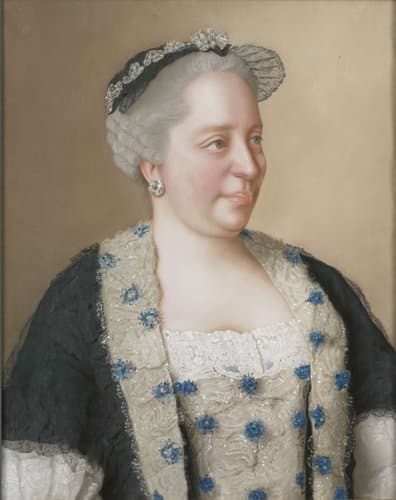
Medium
pastel on vellum
Dimensions
5.2; 62.5; 50.7; 65.6; 9.2; 77.5
Rights
Public Domain
About this artwork
geheel: gewicht 9,2 kg (inclusief lijst en 2mm glas)
Art Historical Context
This striking pastel portrait by Jean-Étienne Liotard captures Empress Maria Theresa of Austria in 1762, at the height of her reign as Archduchess of Austria, Queen of Hungary and Bohemia, and Holy Roman Empress. A formidable ruler during the Enlightenment and the Seven Years’ War, she implemented sweeping reforms in education, law, and the military while navigating the challenges of a vast, multi-ethnic empire. Liotard’s sensitive depiction conveys both her regal authority and personal dignity, presenting her as a symbol of enlightened monarchy. Liotard, a Swiss-French artist celebrated for his mastery of pastel, worked on vellum—a fine parchment surface prized for its smooth texture and ability to hold delicate layers of color. Pastel allowed him to achieve the soft modeling of skin, luminous fabrics, and subtle expressions that made his portraits so lifelike. The choice of medium reflects the 18th-century taste for intimate yet prestigious likenesses that could travel easily between courts. Measuring 62.5 by 50.7 centimeters and weighing over nine kilograms with its protective frame and glass, the work remains a testament to Liotard’s international reputation. Today it resides in the Rijksmuseum, offering visitors a vivid connection to one of Europe’s most influential 18th-century sovereigns.
About the Artist
Jean-Etienne Liotard · 1692–1789
Comment on works: Portraits