
Mary, Queen of Scots
late 18th century
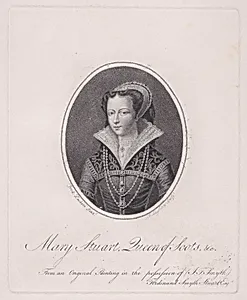
Medium
Stipple engraving
Dimensions
Plate: 7 3/8 × 5 7/8 in. (18.7 × 15 cm) Sheet: 11 1/4 × 7 7/8 in. (28.5 × 20 cm)
Classification
Prints
Department
Drawings and Prints
Museum
Metropolitan Museum of Art, New York, NY
Credit
Gift of Susan Dwight Bliss, 1958
Accession Number
58.549.201
Rights
Public Domain
Tags
Art Historical Context
This stipple engraving, titled *Mary, Queen of Scots is a late 18th-century print Joseph Singleton, likely reproducing an earlier portrait associated with the iconic 16th-century monarch. a modest plate size of 7 3/8 × 5 7/8 inches, it captures the queen's regal poise, evoking her tragic life as ruler of Scotland, claimant to the English throne, and victim of political intrigue that led to her execution in 1587. Housed in the Metropolitan Museum of Art's Drawings and Prints department, it was a gift from Susan Dwight Bliss in 8. Stipple engraving, Singleton's chosen medium, exemplifies a refined 18th-century technique where artists used fine dots rather than lines to build subtle tones and textures, ideal for delicate portraits and reproductive prints. Popular in Britain during this era, it allowed affordable dissemination of historical figures' images, blending artistry with mass appeal and highlighting Mary's enduring allure as a symbol of beauty, power, and misfortune. For visitors, this work bridges centuries, reminding us how Mary's story—marked by romance, betrayal, and resilience—continued to captivate Enlightenment audiences, immortalized in intricate dots on paper.