
Mask and Foot Cover of "Corn Mummy"
Unknown Artist
400–250 B.C.
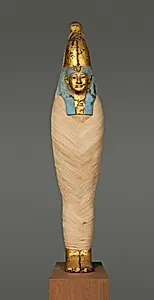
Medium
Gilded wax on a reconstructed body of ancient linen
Dimensions
H. 68 cm (26 3/4 in.); W. 14.4 cm (5 11/16 in.); D. 11.8 cm (4 5/8 in.)
Classification
Mask, foot cover, Osiride figure
Period
Ptolemaic Period
Department
Egyptian Art
Museum
Metropolitan Museum of Art, New York, NY
Credit
Gift of Mrs. Goddard DuBois, 1942 (42.6.1b, d–f), 1944 (44.6.1)
Accession Number
44.6.1
Rights
Public Domain
Tags
Art Historical Context
Step into the mystical world of ancient Egyptian rituals with the *Mask and Foot Cover ofCorn Mummy"*, a artifact from 400–250 B.C. during the Late Period transitioning into the Ptolemaic. Crafted by an unknown artist, this piece—housed in the Metropolitan Museum of Art's Art department—was part of a "corn mummy," a symbolic figure representing the god Osiris. These effigies, made from-packed linen wrapped in the shape of a mummified body, were central to fertility festivals like the Khoiak, where sprouting grains evoked Osiris's resurrection and the Nile's life-giving floods. The mask and foot covers are rendered in gilded wax, a luxurious technique that lent a shimmering, divine glow symbolizing eternity and the gods' favor. Applied over a reconstructed body of ancient linen (dimensions: H. 68 cm; W. 14.4 cm; D. 11.8 cm), the gold leaf evokes the pharaohs' burial masks, blending everyday ritual objects with royal splendor. This Ptolemaic Period creation highlights Egypt's enduring blend of agriculture, religion, and artistry, gifted to the Met by Mrs. Goddard DuBois in 1942 and 1944. Though fragmented, these elements offer a window into Osiris worship, reminding us how ancient Egyptians fused the natural world with the divine to ensure cosmic renewal.