
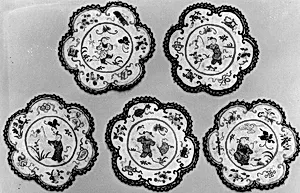
Medallion
Unknown Artist
18th–19th century
Medium
Silk; on silk
Dimensions
3 1/2 x 3 1/2 in. (8.89 x 8.89 cm)
Classification
Textiles-Embroidered
Culture & Period
China · Qing dynasty (1644–1911)
Department
Asian Art
Museum
Metropolitan Museum of Art, New York, NY
Credit
Bequest of William Christian Paul, 1929
Accession Number
30.75.818
Rights
Public Domain
Tags
Art Historical Context
This delicate silk medallion, embroidered on silk, hails from China's Qing dynasty (16441911), a period renowned for its opulent craftsmanship and refined artistic traditions. Measuring just 3½ x 3½ inches, this square textile exemplifies the exquisite precision of Qing embroidery, where skilled artisans layered fine silk threads to create vibrant, textured designs. Likely intended as a decorative ornament for clothing, accessories, or furnishings, its small scale highlights the era's mastery of miniature artistry. Butterflies, a recurring motif captured in the tags, hold deep cultural symbolism in Chinese art, representing joy, transformation, and conjugal harmony. During the Qing dynasty, such embroidered motifs adorned elite garments and objects, blending technical virtuosity—through techniques like satin stitch and padding for dimensionality—with auspicious themes drawn from nature and folklore. Silk-on-silk embroidery was particularly prized for its luminosity and durability, reflecting the dynasty's economic prosperity and patronage of the arts. Now housed in the Metropolitan Museum of Art's Asian Art department, this medallion entered the collection through the 1929 bequest of William Christian Paul. It offers visitors a window into everyday luxury of imperial China, inviting appreciation for the anonymous hands that wove beauty into fabric.