
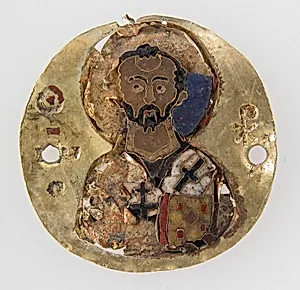
Medallion of St. John Chrysostom
Unknown Artist
10th–11th century
Medium
Cloisonné enamel, gold
Dimensions
Overall: 1 x 1/16 in. (2.6 x 0.1 cm)
Classification
Enamels-Cloisonné
Culture
Byzantine
Department
Medieval Art
Museum
Metropolitan Museum of Art, New York, NY
Credit
Gift of J. Pierpont Morgan, 1917
Accession Number
17.190.661
Rights
Public Domain
Tags
Art Historical Context
This exquisite *Medallion of St. Chrysostom*, crafted by an unknown Byzantine artist in the 10th–11th century, captures the revered Church Father in a diminutive yet masterful form. Measuring just 1 x 1/16 inch (2.6 x 0.1 cm), the gold medallion features cloisonné enamel, a technique where thin gold wires form tiny cells filled with vibrant glass enamels, then fired to create durable, jewel-like images. Saint John Chrysostom, the "golden-mouthed" preacher and Archbishop of Constantinople (c. 347–407), is depicted as a symbol of eloquence and piety, reflecting Byzantine devotion to early Christian saints. Cloisonné enamel on gold was a pinnacle of Byzantine craftsmanship, prized for its luminous colors and precision, often adorning jewelry, reliquaries, or liturgical objects. This medallion's small scale suggests it may have been worn as a pendant or set into a larger ecclesiastical treasure, embodying the era's fusion of artistry and faith during the Middle Byzantine period—a time of artistic revival under imperial patronage. Now housed in the Metropolitan Museum of Art's Medieval Art Department (gift of J. Pierpont Morgan, 1917), it offers a window into Byzantium's enduring legacy: intricate, portable icons that bridged the divine and the everyday, inspiring awe in worshippers across centuries.