
Medicijndoosje (inrô)
1823
Medium
nishikie, with metallic pigments and blindprinting
Dimensions
200; 172
Rights
Public Domain
About this artwork
verzamelaarsmerk, verso, gestempeld: Lugt 2228
Art Historical Context
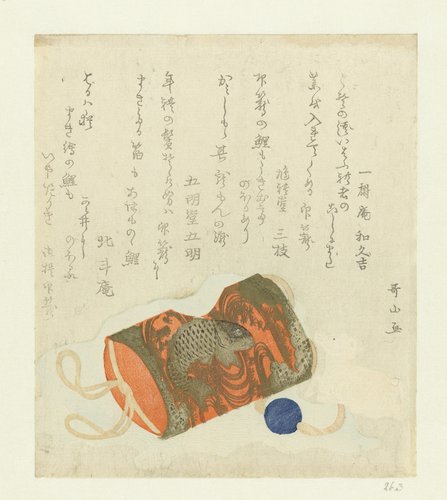
**Medicijndoosje (Inrô)** by Ishikawa Utayama (3) is a exquisite example of late Edo-period Japanese woodblock printing, capturing the intricate beauty of an *inrô*—a traditional lacquered medicine box worn on a man's kimono sash. These portable cases, often adorned with elaborate designs, netsuke toggles, and *ojime* beads, were essential accessories for samurai and merchants alike, blending functionality with artistry during Japan's Tokugawa era (1603–1868). Utayama, a skilled ukiyo-e practitioner, highlights the box's refined craftsmanship, evoking the floating world (*ukiyo*) of fashion and luxury. Printed in *nishikie*—vibrant "brocade pictures" renowned for their jewel-like colors—this work employs advanced techniques like metallic pigments for shimmering gold and silver effects, and blindprinting (or *karazuri*) to create subtle embossed textures without ink. Measuring just 200 × 172 mm, its intimate scale suited private appreciation, possibly as a *surimono* (custom commission), a format popular among poets and collectors for its opulence. On the verso, a collector's mark (Lugt 2228) stamps its European provenance, underscoring how such prints bridged East and West in the 19th century. This piece invites us to marvel at Japan's printmaking pinnacle, where everyday objects became windows into cultural elegance.