
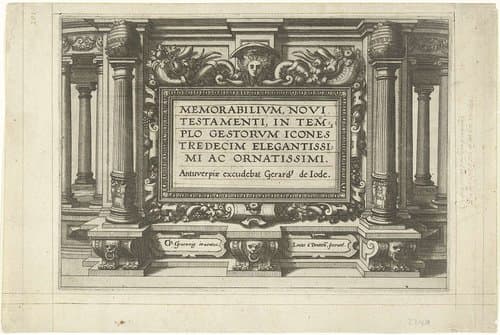
Memorabilivm Novi Testamenti in templo gestorvm icones tredecim elegantissimi ac ornatissimi
c. 1572
Medium
engraving
Dimensions
205; 292
Rights
Public Domain
About this artwork
gravure en ets
Art Historical Context
**Memorabilivm Novi Testamenti in templovm icones tredec elegantissimi ac ornat** (c. 1572) is a stunning engraving by Lucas van Dochum, a masterful Dutch printmaker from Antwerp active during the Northern Renaissance. This work, measuring 205 × 292 mm, forms part of a series of thirteen elegant plates depicting key New Testament events in the temple, such as Christ's presentation or the money changers' expulsion. Van Doetechum, often collaborating with his brother Jan, excelled in reproductive engravings, translating elaborate designs—likely from contemporary painters—into intricate prints that captured dramatic religious narratives with ornate architectural details and expressive figures. Engraving, the medium here (noted as "gravure en ets" in period records), involved meticulously incising fine lines into a copper plate, allowing for rich tonal depth and precise line work that mimicked painting's luminosity. This technique was revolutionary in the 16th century, enabling widespread dissemination of art amid the printing press boom, making sacred scenes accessible beyond elite patrons. Created amid the Dutch Revolt's religious fervor, this series reflects Counter-Reformation ideals, blending devotion with artistic virtuosity. Van Doetechum's "elegantissimi ac ornatissimi" style—highly decorative yet narratively focused—highlights engraving's role in preserving and popularizing biblical iconography for homes and churches, inviting visitors to ponder faith's temple-centered drama today.