
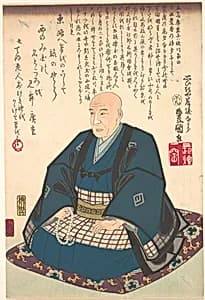
Memorial Portrait of Ichiryusai Hiroshige (1797–1858)
Medium
Woodblock print; ink and color on paper
Dimensions
14 1/4 x 9 5/8 in. (36.2 x 24.4 cm)
Classification
Prints
Culture & Period
Japan · Edo period (1615–1868)
Department
Asian Art
Museum
Metropolitan Museum of Art, New York, NY
Credit
Henry L. Phillips Collection, Bequest of Henry L. Phillips, 1939
Accession Number
JP2832
Rights
Public Domain
Tags
Art Historical Context
This poignant woodblock print, titled *Memorial Portrait of Ichiryusai Hiroshige (7–1858)*, honors one of Japan's most celebrated ukiyo-e masters. Created during the late Edo period (16151868), it features the likeness of Ando Hiroshige, renowned for his evocative landscapes like *The Fifty-three Stations of Tōkaidō*. Produced after his death in 185, likely as a tribute from fellow artists, the portrait captures Hiroshige dignified presence, surrounded by symbols of his legacy in the "floating world" of printmaking. The artwork is a collaborative effort attributed to Yokogawa Horitake, Utagawa Kunisada (also known as Toyokuni III), and Utagawa Toyokuni II—key figures in the influential Utagawa school. This school's dynamic style blended realism with decorative flair, excelling in portraits of actors, beauties, and now, revered masters. Printed with vibrant inks and colors on paper, the 14¼ × 9⅝-inch ōban format was ideal for affordable dissemination among Edo's urban audiences, reflecting ukiyo-e's democratic appeal. Housed in the Metropolitan Museum of Art's Asian Art collection, this piece underscores the communal reverence for artistic genius in 19th-century Japan, where memorial prints preserved cultural heroes amid rapid social change. A window into Edo-era artistry, it invites us to reflect on Hiroshige's enduring influence on global impressions of Japanese aesthetics.
About the Artist
Yokogawa Horitake|Utagawa Kunisada|Utagawa Toyokuni II ( |Japanese) · |1797 – |1861
|Japanese, 1797–1861